
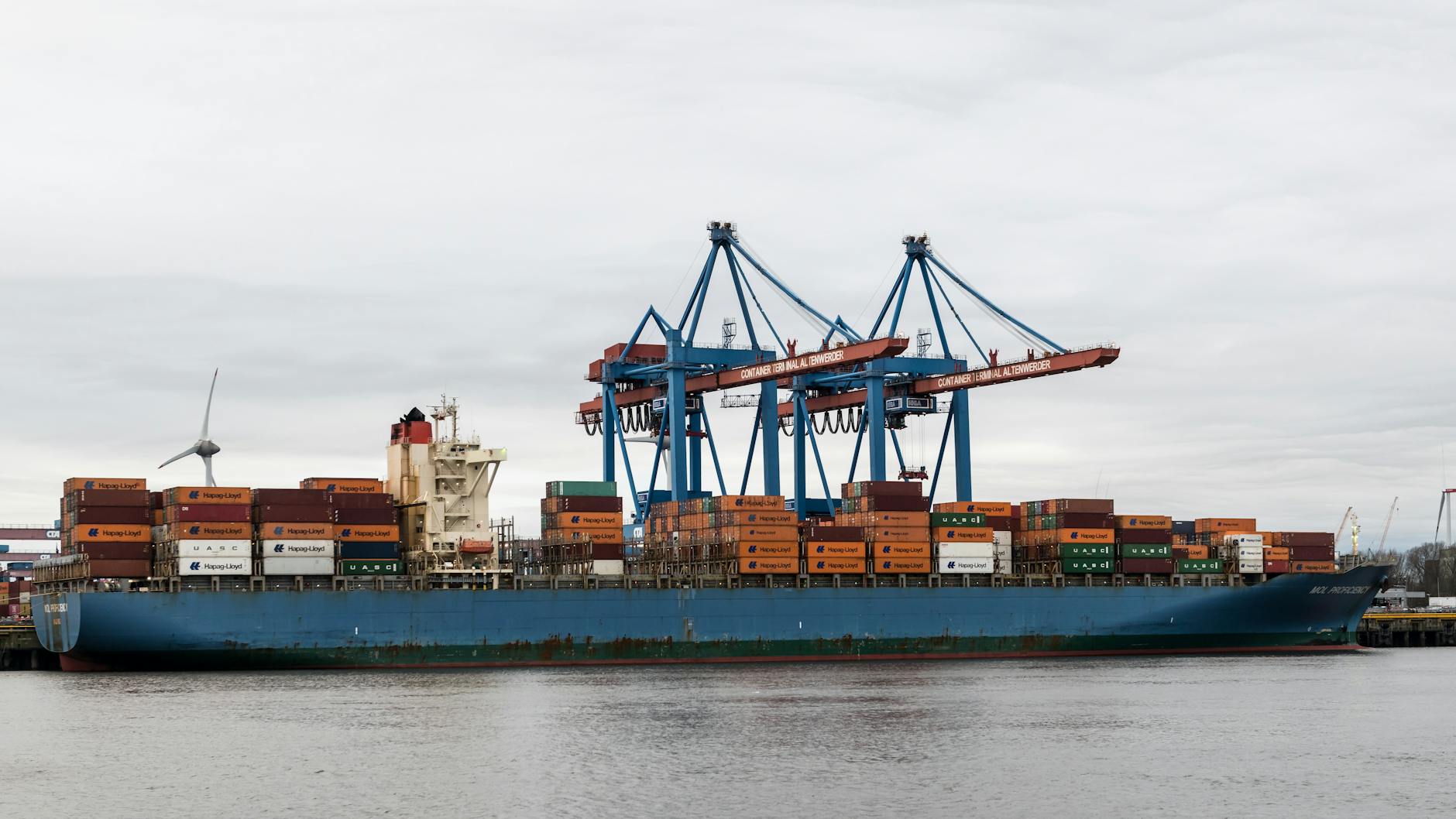
WASHINGTON, D.C. — The global shipping industry is facing its most severe disruption in decades as the conflict between the United States, Israel, and Iran enters its second week. As of Saturday, March 07, 2026, the strategic Strait of Hormuz remains effectively closed to commercial traffic, sending shockwaves through international supply chains and forcing a massive rerouting of global cargo.
Strait of Hormuz Shutdown Paralyzes Energy and Goods
The escalation of hostilities has led to a near-total halt of oil tanker and container ship movement through the Strait of Hormuz, a chokepoint that typically handles 20% of the world’s petroleum. Industry bellwether Maersk announced yesterday the suspension of two key shipping services in the Middle East, citing the “evolving security situation” and the lack of a short-term outlook for a ceasefire.
The impact is being felt immediately at the pump and in retail sectors. Supertanker costs in the Middle East have surged to all-time highs as carriers introduce emergency surcharges to cover rising fuel costs and war-risk insurance premiums. Analysts warn that the continued closure will lead to significant price hikes for American consumers on electronics, pharmaceuticals, and automotive parts.
A Century of Maritime Law Tested by Modern Warfare
The current crisis highlights the fragility of a system built on decades of international cooperation. While the 1924 Hague Rules and the 1982 International Convention on Tonnage Measurements provided a stable framework for a century, the “weaponization” of key maritime corridors is testing the limits of the International Maritime Organization (IMO).
Shipping companies are now rerouting vessels around the Cape of Good Hope, adding up to 14 days to transit times. This shift is not only delaying goods but also straining global capacity. In the United States, the Less-Than-Truckload (LTL) market is attempting to maintain pricing discipline, but the ripple effects of maritime delays are expected to test domestic logistics resolve by mid-month.
The End of “Fast and Free” Shipping?
Beyond the geopolitical conflict, the shipping industry is undergoing a structural shift. Major retailers and carriers like FedEx and UPS are increasingly moving away from the “fast and free” delivery model that dominated the last decade. To combat rising operational costs and the volatility of international trade, companies are incentivizing “no-rush” delivery options and implementing new fees.
Public insights suggest that while global schedule reliability had stabilized around 55% in late 2024, the current conflict has shattered those gains. Experts predict that the industry will increasingly turn to AI-driven logistics—a market expected to reach $549 billion by 2033—to navigate these “seas of uncertainty.”
Illicit Trade and Sanction Gaps
As legitimate shipping lanes close, illicit routes are expanding. Recent reports indicate that some European logistics firms are exploiting legal loopholes to ship contraband to sanctioned regions, including Russia. This “shadow” shipping industry further complicates the regulatory landscape for the IMO and U.S. trade authorities as they attempt to maintain the integrity of global sanctions while keeping essential goods moving.
For now, the maritime industry remains in a state of high alert. With the Red Sea and Persian Gulf effectively designated as high-risk zones, the global economy awaits a diplomatic resolution to prevent a full-scale collapse of the 2026 spring trade season.